Quantcast
Showing posts with label ships. Show all posts

Wednesday, September 12, 2018

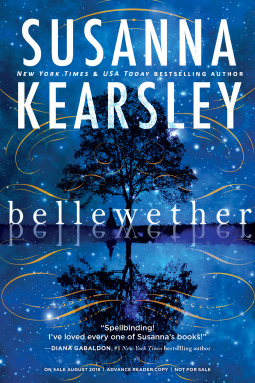
Bellewether by Susanna Kearsley

I was thinking about how to start this review, and immediately I thought I'd say "Susanna Kearsley is one of my favorite authors"-but I stopped myself, because it seems like I have an awful lot of favorite authors! But it's true, and I am always happy to add to the list of authors that I will read without question. Jane Harper joined earlier this summer, after I read Dry. My love of Susanna's novels goes much farther back; years, actually. It's not often that I find historical novels that have an element of the supernatural tied into them; not only that key (and favorite) element, but that they end up being darn good reads, too. 

Susanna Kearsley is one of those authors who digs deep into history, then spins a tale that never fails to grab me. I've read most of her novels, and was excited to see Bellewether on Sourcebook's upcoming new releases list earlier this year. I've been patient, and have been reading this on and off in between other books. I was immediately taken by the contemporary story of Charley as the new curator of the Wilde House, a historic home on Long Island; the family home of one Benjamin Wilde, a famous Revolutionary War figure. Charley's family history is also based nearby; her father rather infamously refused to fight in the Vietnam War, and fled to Canada. Her grandparents, pillars in the community, disowned him and Charley has never met or talked to her grandparents. Her brother lived in the community with his daughter Rachel, but he recently died, and Charley took the job at the Wilde House in part to help her niece navigate life without her father. 

Wilde House, near a secluded cove and surrounded by a forest, is reportedly haunted by a figure that some say is a French soldier, wandering the forest with a lantern, lighting the way safely to the cove. Other rumors of murder, and a love story that ends tragically, add to the mystery of the Wilde House. Charley is there to oversee renovations, dig into the history of the house, and improve on the story of Benjamin Wilde. She is, of course, interested in finding out more about the Wilde family, and what life was like for them during the Seven Years War. The war pitted the French and the British against each other, and saw prisoners of war housed in local family homes while waiting for prisoner trades to occur between the French and the British. This was in the decade before the Revolutionary War, when Americans were still Colonists, and had loyalty to England. 

The other part of the novel centers on Lydia, sister to Benjamin Wilde, and Jean-Philippe, a French solider who has been brought to the Wilde house as a prisoner of war to await trade negotiations with the British. Jean-Philippe speaks no English, and Lydia speaks no French. He's definitely seen as the enemy, and yet Lydia and Jean-Philippe can't help but develop feelings for each other. What will happen when he's finally taken away? Will he end up back in Quebec to fight again? How would Lydia's family feel if they found out about the growing attraction between the two? 

The two stories, separated by centuries, but tied together by the Wilde House, work well together. The complex issues of the Seven Years War are explained well enough to be clear, but not so much that you're dragged down by a history lesson. All the little pieces of information Charley finds, along with help from an unknown spirit in the house, slowly bridge the gap between what happened in Lydia's time, and what Charley knows in today's world. But oh gosh, you just don't know until the end if Lydia and Jean-Philippe have a happy ending, or if it ends in tragedy. 

I think part of what made this novel so enjoyable for me is my deep desire to actually be a curator at a historical home. That's another career that appeals to me, but I'll just have to be content to visit historical places and enjoy what others have uncovered. Lydia and Charley are both strong female characters, and both have strong counterparts in Jean-Philippe and Sam, the expert at historical reconstruction who catches Charley's eye. Overall, a good, solid historical fiction tale with a dash of romance, a bit of the supernatural, and a whole lot of history, and how we try to create truthful stories based on what's left behind. 

Rating:  5/6 for a very good historical novel with dual storylines: one set in the 1760's, another set in contemporary Long Island-and both set at Wilde House. This novel is interesting in that it delves into the Seven Years War, which I hadn't read about before. It also speaks to the importance of historic preservation, and the stories our ancestors have left behind for us to discover. 

Available in paperback and ebook. 

Tuesday, February 20, 2018

The Great Halifax Explosion by John U. Bacon

One of my side interests is reading about disasters.  It's always fascinated me that such horrible destruction happened in fairly modern history, yet remains largely unknown in today's world. Oftentimes people are completely oblivious about something that was in all the newspapers and largely known by everyone at the time, and seemed utterly unforgettable. 

The Sultana, a river boat carrying Civil War soldiers back home after the war, exploded on the Mississippi River with 1,800 killed.  The Eastland, a passenger ship that capsized next to a dock in the Chicago River in 1915, killing 848 people.  The Great Molasses Flood of 1919 in Boston, where 21 people were killed by yes--a flood of maple syrup racing down the streets.  There are so many, sadly, and I think the only one I have yet to read about is the Lusitania.  

I had heard about the Halifax explosion, but this was the first book I read about it, and it was fascinating.  It reminded me of Erik Larson's book Isaac's Storm about the 1900 Galveston Hurricane, which wiped out the whole city, with thousands dead and nothing left standing.  John Bacon uses the same storytelling style of Erik Larson to create a history book that brings Halifax alive, and sets the stage for the explosion on December 6, 1917.  World War I was raging, and Halifax was an important harbor where ships loaded with supplies for soldiers came and went.  It was a hopping town, with a large population and many new industries.  The Mont-Blanc, a freighter pressed into service, had arrived from New York loaded with six million pounds of explosives, destined for Europe.  It was a risky undertaking, but the supplies were needed so badly by the forces fighting in Europe, it was deemed worth the risk.  The captain and crew were very aware they were sitting on a potential bomb, and any sudden movement would cause the ship to blow; not to mention the potential for u-boats to torpedo the ship once it was out to sea.  

On the morning of December 6, 1917, the Mont-Blanc was waiting to leave Halifax.  Another ship, The Imo, was also waiting impatiently to leave Halifax harbor.  Through miscommunication, grandstanding, and important people not knowing just what the Mont-Blanc carried, the inevitable happened: the two ships collided.  The Mont-Blanc crew, realizing the ship was going to blow, got off and rowed away, neglecting to warn the people of Halifax what was probably going to happen.  The Mont-Blanc drifted into a dock, where it burned, and drew curious citizens to see the flames and smoke. Yes, I know. I was horrified.  School kids, dock workers, Moms and Dads all drifted down to the dock to see what was going on.  People could see the burning ship for miles around, on the hills leading down to the harbor.  

And then, in an instant, the ship exploded, sending a mushroom cloud upwards, and obliterating the Mont-Blanc, the dock, and hundreds of people. They were vaporized. This was the largest man-made explosion until World War 2. The shockwave blew out windows for miles around, flattened buildings and homes, and created a tsunami in the harbor.  An estimated 2,000 people were killed, 9,000 injured, and 25,000 left homeless. Fires, flood, and a blizzard the next day (which dropped 16 inches of snow on Halifax) created even more barriers for help to arrive, and provide shelter for the injured and homeless.  

But what is most interesting about this book is the resilience of the people, and how so many came together so quickly to provide medical assistance, shelter, food, clothing, and anything else that was needed.  People didn't mess around.  They took action, freely gave money and supplies without thought of compensation, and opened their homes to so many who had lost everything.  It was amazing to read.  The word "hero" is so overused today that for me it's lost a lot of meaning and impact.  These everyday folks all were heroes, and expected nothing in return.  There was no social media; reporters came to town, and got out the stories; telephones were cut off or barely worked; yet the story got out, and the response was to send help, not profit off of it.  

Anyone who is a fan of World War I history, or just plain history would love this book.  There are some photos in the book, and I'm sure there are even more online.  If you visit Halifax, there is the Maritime Museum of the Atlantic, along with the mass grave at Fairview Lawn Cemetery, where unidentified victims were buried. 

Rating:  5/6 for a thorough look at the causes of the Great Halifax Explosion; the resilience and hard work of the citizens who worked tirelessly to recover, and the survivors who remained forever affected by that horrible December day.  

Available in hardcover, and ebook.