Quantcast
Showing posts with label soldiers. Show all posts

Sunday, March 19, 2023

March Read: The Librarian of Burned Books by Brianna Labuskes


Have you ever heard of the Armed Services Editions? They were paperbacks of novels that were shipped overseas to U.S. troops during World War 2. Many novels we consider classics were part of this giant effort to combat Nazi book burning and censorship. The books also provided soldiers with reading material to give them some relief from the constant stress of battle. 

Author Brianna Labuskes uses the ASE as a large part of her novel. Vivian Childs is living in New York City in 1944. Her husband has been killed in battle, and while mourning his loss, she's been working as the publicity director for the Council on Books in Wartime. She's working hard to keep books flowing into the hands of soldiers overseas, but has one Senator who is using his personal dislike of President Roosevelt to cripple the program. Senator Taft wants to censor the books, and if the amendment goes through, it means thousands of books will be banned from the program. 

The plot of the story also involves two women: Althea James and Hannah Brecht. Althea is a young American author who has been invited by Joseph Goebbels to Germany in a cultural exchange program in 1933. It's a thinly disguised attempt for the growing Nazi power to influence American minds. Althea is pretty naive and is excited to leave her small town in Maine. She's living in Berlin, is escorted around by a handsome young man, and has been exposed to Nazi idealism. 

Hannah Brecht is a Jewish woman living in Paris in 1936. The Nazis have not yet invaded France, but it's expected they will. Hannah has fled from Germany after a devastating event, and now works at a library that collects copies of the banned books students gleefully burned one night in May, 1933. She's haunted by the events of 1933 that left her feeling betrayed by those closest to her. 

All three stories connect together in New York, 1944 as Viv works to create a last ditch effort to bring awareness to Senator Taft's amendment.  The novel switches back and forth between 1933, 1936, and 1944. I didn't have any trouble following along, and each of the women were strong characters. I can't say I liked any one of them better than the other two. It was interesting to read about the same war from three different places and eleven years apart. I was especially interested in the ASE history and what it did to boost morale for soldiers. 

It took me a bit to get into this novel. Part of that was, as always, my reluctance to read about the rise of Nazi power and all of the horrible, horrible things that happened. What was interesting is the idea of book banning and censorship occurring here, in the U.S.  In light of what is currently going on in our schools and public libraries, this really hit home and because of that, this was a powerful, timely read for me. 

As someone who has worked their entire adult life selling books, talking about books, recommending books, reviewing books, selecting books for a library--I find censorship horrific. Banning books? Hell no. I speak from personal experience as a young reader who had books taken away from me because my mom didn't think they were appropriate. Over 40 years later, I remember every book and every time they were taken away from me. I remember being so angry about that, and telling myself I would never, ever do that to my future children. I still, deep down, carry that resentment. I am one of those kids who wasn't allowed to read what they wanted. It didn't stop me, instead it fired me up. Read with your child! Talk to them about why they're interested in reading a particular book. Don't ban a book because you don't like it. Don't keep your children from reading something that interests them.  As Hannah says in this novel

    I can tell you that banning books, burning books, blocking books is often used as a way to erase a people, a belief system, a culture. To say those voices don't belong here even when those writers represent the very best of a country.

Okay. I'll get off my soapbox. 

This novel has some interesting historical background, and if you're interested in learning more about the American Service Edition program, read  When Books Went to War by Molly Guptill Manning. 

This would be a great book club selection with plenty to discuss. 

Rating: 4/6 for a novel about love, betrayal, censorship, apathy, and friendship. Historical fiction fans will be intrigued by the ASE program and the events of May, 1933 in Berlin. 

Available in paperback, ebook, and audio. 


Thursday, May 19, 2022

Little Souls by Sandra Dallas


If you've been following my blog for a long time, you know I'm a big Sandra Dallas fan. I was thrilled to finally sit down and read her new book. Reading a novel by Sandra Dallas always feels comforting to me, and this novel was no different. 

Set in Denver during the Spanish Flu Pandemic and last days of World War One, this novel is about two sisters, Lutie and Helen. With their parents dead, both sisters moved from Cedar Rapids, Iowa (always an Iowa connection in Dallas' novels!) to Denver to start fresh. Helen is a nurse and works long hours tending to flu patients. Lutie works for a department store drawing advertisements. They own a home and rent the basement out. 

The basement residents are a couple and their young daughter Dorothy. Unfortunately, Dorothy's father is a mean, nasty man-a drunk and an abuser. When Dorothy's mother ends up a victim of the flu, Helen and Lutie take her in and decide they will raise her as their sister. It's obvious her father could care less about her, and besides, he's gone for days at a time. 

Until one day Lutie comes home and finds Mr. Streeter (Dorothy's father) dead on the kitchen floor; Helen standing over him with an ice pick. Helen confesses to killing him after finding him attacking Dorothy. Afraid to call the police, Lutie and Helen's beau Gil dispose of the body and pray he'll be mistaken for a flu victim. After all, people were dying in the streets, and so many were dying it was assumed any body left outside was a flu victim. 

With that terrible secret to bear, Lutie, Helen, and Dorothy attempt to keep moving on, but bad times just aren't through with them just yet. I don't want to say what else happens, because it would spoil the whole novel. But if you've read any of Sandra Dallas' novels before, you know there are some twists and turns, some unexpected sorrows, and always sunshine after the rain. Sandra has a talent for writing a good, solid story, with women as the central characters. This story, just like her others, is about everyday people living through extraordinary times; doing their best to survive, find happiness, and have a fulfilling life. 

I loved Lutie and Helen, and their relationship with Dorothy. There are some dark, cruel things that are explained to shed light on character behaviors, but not graphically at all and tastefully done. All in all, a quick read, and a welcome return from one of my favorite authors. 

Rating: 4/6 for a novel set in troubling times; about people who form a family, love each other through hard times, and find ways to heal old wounds. 

Available in hardcover, ebook, and audio. 


Wednesday, September 12, 2018

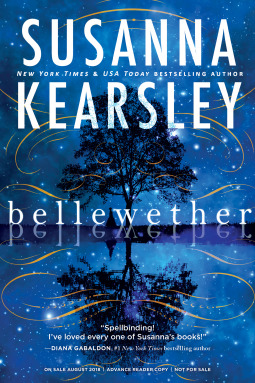
Bellewether by Susanna Kearsley

I was thinking about how to start this review, and immediately I thought I'd say "Susanna Kearsley is one of my favorite authors"-but I stopped myself, because it seems like I have an awful lot of favorite authors! But it's true, and I am always happy to add to the list of authors that I will read without question. Jane Harper joined earlier this summer, after I read Dry. My love of Susanna's novels goes much farther back; years, actually. It's not often that I find historical novels that have an element of the supernatural tied into them; not only that key (and favorite) element, but that they end up being darn good reads, too. 

Susanna Kearsley is one of those authors who digs deep into history, then spins a tale that never fails to grab me. I've read most of her novels, and was excited to see Bellewether on Sourcebook's upcoming new releases list earlier this year. I've been patient, and have been reading this on and off in between other books. I was immediately taken by the contemporary story of Charley as the new curator of the Wilde House, a historic home on Long Island; the family home of one Benjamin Wilde, a famous Revolutionary War figure. Charley's family history is also based nearby; her father rather infamously refused to fight in the Vietnam War, and fled to Canada. Her grandparents, pillars in the community, disowned him and Charley has never met or talked to her grandparents. Her brother lived in the community with his daughter Rachel, but he recently died, and Charley took the job at the Wilde House in part to help her niece navigate life without her father. 

Wilde House, near a secluded cove and surrounded by a forest, is reportedly haunted by a figure that some say is a French soldier, wandering the forest with a lantern, lighting the way safely to the cove. Other rumors of murder, and a love story that ends tragically, add to the mystery of the Wilde House. Charley is there to oversee renovations, dig into the history of the house, and improve on the story of Benjamin Wilde. She is, of course, interested in finding out more about the Wilde family, and what life was like for them during the Seven Years War. The war pitted the French and the British against each other, and saw prisoners of war housed in local family homes while waiting for prisoner trades to occur between the French and the British. This was in the decade before the Revolutionary War, when Americans were still Colonists, and had loyalty to England. 

The other part of the novel centers on Lydia, sister to Benjamin Wilde, and Jean-Philippe, a French solider who has been brought to the Wilde house as a prisoner of war to await trade negotiations with the British. Jean-Philippe speaks no English, and Lydia speaks no French. He's definitely seen as the enemy, and yet Lydia and Jean-Philippe can't help but develop feelings for each other. What will happen when he's finally taken away? Will he end up back in Quebec to fight again? How would Lydia's family feel if they found out about the growing attraction between the two? 

The two stories, separated by centuries, but tied together by the Wilde House, work well together. The complex issues of the Seven Years War are explained well enough to be clear, but not so much that you're dragged down by a history lesson. All the little pieces of information Charley finds, along with help from an unknown spirit in the house, slowly bridge the gap between what happened in Lydia's time, and what Charley knows in today's world. But oh gosh, you just don't know until the end if Lydia and Jean-Philippe have a happy ending, or if it ends in tragedy. 

I think part of what made this novel so enjoyable for me is my deep desire to actually be a curator at a historical home. That's another career that appeals to me, but I'll just have to be content to visit historical places and enjoy what others have uncovered. Lydia and Charley are both strong female characters, and both have strong counterparts in Jean-Philippe and Sam, the expert at historical reconstruction who catches Charley's eye. Overall, a good, solid historical fiction tale with a dash of romance, a bit of the supernatural, and a whole lot of history, and how we try to create truthful stories based on what's left behind. 

Rating:  5/6 for a very good historical novel with dual storylines: one set in the 1760's, another set in contemporary Long Island-and both set at Wilde House. This novel is interesting in that it delves into the Seven Years War, which I hadn't read about before. It also speaks to the importance of historic preservation, and the stories our ancestors have left behind for us to discover. 

Available in paperback and ebook. 

Monday, July 10, 2017

Heroines of Mercy Street: The Real Nurses of the Civil War by Pamela D. Toler, PhD

My unceasing interest in women living through the Civil War continues with The Heroines of Mercy Street. This history book focuses mostly on the experiences of a few women living and working as nurses in the North during the American Civil War of 1861-1865.  Many people may be familiar with the PBS series  Mercy Street.  It created such interest in the characters that this book was written to look a bit closer at the women who worked under miserable circumstances and conditions to treat the wounded from both the Yankee and Confederate sides. 

Dorothea Dix was a feisty middle-aged spinster who inherited her grandparent's wealth, and that made possible her endeavors to bring reform to sanitariums, jails, poorhouses, and the treatment of mentally ill prisoners.  She was a woman on a mission, and when the Civil War began with the firing on Fort Sumter in April, 1861 she was ready to help gather supplies that would be needed to care for the wounded soldiers that were sure to come.  She faced an uphill battle in her quest to hire women for nursing positions.  There were no nursing schools in the United States in 1861; the only women who were loosely called nurses were those who were working off jail sentences.  They were drunks, uneducated, and usually women of ill-repute.  

Dorothea's strict requirements kept a lot of otherwise perfectly capable women out of the nursing positions she needed to fill.  She only wanted women who were plain faced, in their 30's and older, and of a very good reputation.  She did get plenty of women traveling to Washington, D.C. to work in hastily constructed hospitals, but her strict rules and the overwhelming opposition to women taking care of soldiers by doctors, surgeons, and pretty much every male in the U. S. Army created a lot of issues.  

Some women, you'll be glad to know, ignored Dorothea's rules and struck out on their own, often times just showing up at hospitals (which were usually hotels, factories, churches, and homes) hoping to help.  For many, the severity of soldiers' injuries was too much.  Some had very genteel ideas of what it meant to take care of soldiers.  Dysentery, typhoid fever, and so many other diseases ran rampant through the troops.  The medical world in the U.S. at the time of the Civil War was far behind Europe; there was still no belief in sterilization, clean water and instruments for the wounded, nor clean linens or bandages.  Infections and gangrene were everywhere.  Nurses oftentimes slept on the floor or in chairs, ate hard bread and really bad coffee, and worked 12 hour days with no breaks.  And the majority weren't trained in much of anything.  It's appalling to realize just how many soldiers died from sheer ignorance of basic cleanliness, or soldiers suffering from gastrointestinal diseases that kept them from eating the usual horrible foods offered in the hospitals. Women in the hospitals pushed to create special diets for soldiers who were unable to eat the heavy meals cooked for fighting soldiers.  There are just certain things you don't give someone who has dysentery and expect them to recover!

Dorothea isn't the only woman featured in this fascinating book.  Anne Reading, Mary Phinney von Olnhausen, Louisa May Alcott, Clara Barton, and so many others were at the forefront of new radical changes in medicine and the dawning of a fundamental change in medical care in the U.S.  It's hard to imagine nurses were seen as little better than prostitutes in 1860, but it's true.  One of the good things to come out of this terrible war was the realization of the importance of nurses in the care of and as advocates for patients.  

Clara Barton, addressing an audience in 1888 said "...that as a result of the Civil War women had advanced at least fifty years beyond the position they would have held had the country remained at peace" (p. 221). 

I learned so much about Civil War medicine, the perception of women's capabilities and "delicateness" during mid-19th century America, and the sheer strength and determination of so many women to contribute to the healing of so many damaged men during such a brutal war. It's a fascinating read, and anyone who is interested in women's history, the Civil War, politics, or even medical history will find this a good addition to their history bookshelf. I'd recommend this to anyone who is interested in pursing nursing as a career.

Rating:  4/6 for a part of Civil War history that has been long overlooked.  Such a rich history, and well worth the read!  

Available in paperback and e-book.

Friday, September 16, 2016

Ghost Walkers by Mary Robinette Kowal

I definitely have seasons for different genres of books.  I love to read science fiction/fantasy and paranormal novels when the seasons change from summer to fall;  it starts getting darker out earlier and the cool air makes me think about chili and apple crisp.  It's also the season when all of my favorite ghost shows start new episodes on TV.  When I saw Ghost Talkers on Twitter, I had to check it out. 

Ghost Talkers has a very interesting plot, and I have to give high marks to Mary Robinette Kowal for coming up with this storyline.  The novel is set in World War I Le Havre, a French village occupied by English troops.  Ginger Stuyvesant is a young American heiress working for the English military in an unusual capacity:  she is a medium that communicates with soldiers who have died in battle and can bring news about German troop movements and artillery back to British army headquarters .  There's a secret group of women known as the Spirit Corps who work in a vast warehouse called Potter's Field.   Every day and night, mediums sit in circles with people who ground their spirits while the women work with dead soldiers who have undergone a ritual that will compel their spirit to come back to Potter's Field and give their last report before they go into the light.  England's spiritual secret weapon may turn the war in their favor.  And if the Germans find out about it, it could mean the end of the program and danger for the mediums.  And it seems there may be a traitor to Britain working to expose the Spirit Corps to the Germans...

Ginger is engaged to Captain Ben Harford, a dashing English officer who is working with the Spirit Corps and sending coded letters back to Ginger when he is on the front battle lines.  The relationship between them undergoes some tremendous heartache and growth over the course of this novel.  I can't tell you much more about the plot because it would give it all away!  Needless to say, I was taken aback at the swiftness of major plot points, and they completely changed what I thought the story would be about.  But, I completely enjoyed this novel, even with the very dark and dismal background of World War I.  Ginger and Ben have a great chemistry and rapport, and fellow mediums who have smaller parts in the story add to an overall feeling of a united Britain working to win the war.  

I certainly hope and expect there to be more adventures for the Spirit Corps in future books.  I so want to know what happens next!  This was my first time reading Mary Robinette Kowal, and I'm happy to say her mix of fantasy/paranormal and history is something I like very much.  

Rating:  8/10 for an original plot with two main characters who came to life for me very vividly.  A good mix of history, paranormal, and just darn good writing.  
Available in hardcover, e-book, and audiobook.  I checked it out from my local library.  

Friday, June 17, 2016

Lost Among the Living by Simone St. James

I have been eagerly waiting to read the latest by Simone St. James.  She's the author of four previous novels, all set in England, all revolving around World War I and the supernatural.  I've reviewed The Haunting of Maddy Clare , An Inquiry into Love and Death,  Silence for the Dead, and The Other Side of Midnight. Just click on each title to find my reviews.  As you can see, I'm a big fan of Simone St. James.  She has the mix that I can't resist:  history, a bit of mystery, and enough paranormal creepiness to keep me glued to the pages but not afraid to turn out the light at night. 

In her latest novel, Simone's heroine, Jo Manders is living in 1921 England.  She's the paid companion to Dottie Forsyth.  This job is all that stands between Jo and poverty.  Her husband Alex was listed as missing in action during World War I after his plane was shot down over Germany and his body was never found.  Jo is alone in the world, except for her mother.  But, her mother is institutionalized and doesn't really know who Jo is, and lives completely in her imagination.  Dottie is Alex's Aunt, and in a roundabout way, the closest thing to family Jo has besides her mother. But that doesn't stop Dottie from taking advantage of Jo's situation.  

Jo travels with Dottie to the family estate in the countryside outside of London.  Wych Elm House is a bit neglected and was the site of the suicide of Dottie's fifteen year old daughter Frances.  Three years previously, Frances had jumped to her death from the top of the Wych Elm House.  Village stories of Frances and her demon dog haunting the woods around the estate cast a eerie miasma around the home and all who lived there.  

It doesn't help that Jo sees Frances sitting in the parlor on her first day at Wych Elm.  Yes, Frances is dead.  And Jo just saw a ghost.  Why is Jo seeing Frances around Wych Elm?  Why is Frances trying to get Jo's attention?  

Jo's intuition tells her that Frances didn't commit suicide, but was murdered.  But by whom and for what reason would someone kill a fifteen year old girl?  Was it her own mother, Dottie?  Or perhaps Martin, Frances' older brother, who is recovering from terrible wounds suffered in battle, and addicted to morphine. Or was it the stranger found dead in the woods the same day Frances died?

To top it all off, Jo is haunted by not knowing what happened to Alex, the love of her life.  She's convinced she doesn't know the whole story, and Alex's role in the military was more than she realized.  This becomes even more complicated in Jo's mind when she finds out Alex was at Wych Elm House the day Frances died, when he never told Jo he was even in England.  Why the secrets?  

I've got to say Frances' presence in this one is a bit creepy only because her appearances seem random and she never says anything.  Frances makes things move around, appear and disappear. The atmosphere at Wych Elm House is cold and unwelcoming, even though it is a beautiful country home.  You read the book and can feel that damp fall weather and bone chilling cold that keeps Jo struggling to stay warm.  Even reading  this in very hot temperatures and uncomfortable mugginess (summer in Iowa!) made me want to grab a blanket for warmth and comfort.  

I've really loved all of Simone St. James' books, but I have to say this was my least favorite.  I can't put my finger on it, but I felt her previous novels had a more solid storyline and were definitely up a notch in the paranormal element.  I will certainly keep reading anything Ms. St. James has to offer in the coming years; I just hope she keeps giving me chills in the middle of  the summer.  

Rating:  6/10 for an interesting story line, but one that could have had more paranormal creepiness.  Historical background was very interesting, and you can tell the author does her homework.  

Available in paperback and e-book.

Saturday, March 5, 2016

At the Water's Edge by Sara Gruen

I've been missing my historical fiction, so I was glad to pull this off my bookshelf and dive into it.  Of course I read Water for Elephants years ago; if I remember correctly, I even read the hardcover on the way to Chicago to visit a museum exhibit with my sister Pam.  I did attempt to read this book when it first came out, but I admit I tried and just didn't get into it.  

Now, a year later, it's in paperback, and I forgot I'd tried to read it before and bought the paperback last month.  I think the cover is so striking you can't help but pick it up.  So glad the publisher kept the same cover from the hardcover version to the paperback.  What drew me to this book, besides the cover?  Well, the Loch Ness Monster, of course.  If it's a book that involves anything "mysterious", I'm ready to read.  

There were many comments I've read about this story in which people were disappointed and unimpressed.  I, however, am happy to say I found it a compelling read and had a hard time being patient when work and other tasks (sleep) kept me away from it.  No, there isn't a lot of action in this novel, but instead it is the growth of Maddie's spirit that moves the storyline.  

Maddie is a young woman married to Ellis Hyde, the son of a prosperous Philadelphia man and his socially conscious wife.  They can't stand Maddie, who's mother, while rich, was known as a beautiful flirt, and a crazy one at that.  Unhappily married to Maddie's father, she made Maddie's life hell, and poor Maddie grew up completely unloved by either parent.  She thought she'd found love with Ellis, but was vaguely dissatisfied with her young marriage, and terrified of her mother-in-law and her obvious disdain for Maddie.  Ellis and his best pal Hank are two men who have been kept out of World War 2 by color-blindness (Ellis) and flat feet (Hank).  They spend their days in Philadelphia sleeping away nights of drinking and partying, with no cares in the world.  Soon enough, Ellis makes a giant drunken mistake at a party, and his parents kick him and Maddie out of their home, leaving them with lots of luggage and little else.  In a desperate bid to redeem himself, Ellis decides they will travel to Scotland--in the middle of World War 2--and find the Loch Ness monster.  Ellis' father had years previously done the same thing, and had been humiliated after claiming proof of the monster's existence.

With nowhere to go, Maddie travels to Scotland with Ellis and Hank.  Their reception in a remote village on the banks of the loch is chilly and they aren't made very welcome.  Maddie, stuck at the inn while Ellis and Hank go off in attempts to spot the monster, slowly begins to form friendships with the women who help at the inn:  Anna and Meg.  And there is the mysterious Angus, who runs the inn.  How is he connected to the headstone in the local cemetery, which bears the sad dates of a baby and mother who died just a few months apart?  

The main point of this novel is the evolution of Maddie, who comes to Scotland a cowed and unsure young woman with no control over her life and at the mercy of other people.  Her relationship with her husband undergoes a dramatic turn, and as Maddie finds out, sometimes monsters are all around us.  World War 2 is a big part of this novel, but mostly in the food rations and night time air raids Maddie experiences.  And of course, there is the suspicion by all that Ellis and Hank are perfectly health for combat, and are actually cowards.  You'll have to read At the Water's Edge to get the whole story!

Rating: 7/10 for a solid story about one woman's search for herself set against the wilds of Scotland and World War 2.  The Loch Ness monster is a background character, but adds a few surprising twists to the story.  I would recommend this as a good book club read. 

Available in hardcover, paperback, e-book, and audio book. 


Friday, May 1, 2015

Mrs. Lee's Rose Garden: The True Story of the Founding of Arlington by Carlo DeVito

I got the chance to visit Arlington National Cemetery about 24 years ago when I was in Washington, D.C. for a short weekend trip. I still remember being in awe of the story of how the cemetery came to be and the connection to Robert E. Lee's family.  Mrs. Lee's Rose Garden is a snapshot of three people:  Robert E. Lee, Mary Custis Lee, and Montgomery Meigs, taken at a time when our nation was divided in war. What at first became a means of revenge is now one of our nation's most revered monuments to bravery and sacrifice.

Arlington was the long held and loved home of the Custis family.  Mary Custis Lee, wife of Robert,  was the great-granddaughter of Martha Washington; her father was a custodian of much of the family treasures of George Washington himself.  Arlington was a jewel of a place, surrounded by rose gardens, acres of land, and sitting on a hill that overlooked a young Washington, D.C.  It was known as one of the most beautiful places around.  It was also the home of Robert E. Lee and his family.  Robert E. Lee was a well-known engineer with the United States Army in the years preceding the Civil War.  He, along with Montgomery Meigs, helped engineer the  flow of the Mississippi River near St. Louis, allowing the city to continue to grow and prosper.  The two were working comrades and friends.  Until the Civil War began.

Robert E. Lee made the incredibly hard decision to resign from the U.S. Army and take command of the Confederate Army.  He knew it would mean his family would have to leave their beloved home, Arlington--now in enemy territory.  His decision was not a light one, and made with a grave heart.  He chose his love of Virginia and his belief in state's rights over what would have been a comfortable, easy move:  to take command of the Union Army.  

Lee was immediately labeled a traitor, and the loudest voice in the mix was Montgomery Meigs.  Mrs. Lee, reluctant to leave her family home, finally packed up some of the precious family heirlooms and left just before her home was taken over by the Union Army.  She believed she would be back within weeks; no one thought the Civil War would last four years.  She left many family pieces in the attic and in the cellar of Arlington.  What she didn't realize was that she would never live at Arlington again.  

Meigs, really pissed at Lee, was the driving force behind the transformation of Arlington from a graceful family home to a cemetery for thousands.  I will leave the rest of the story for you to read, because it is a fascinating one.  

If you're interested in reading more on Arlington, here's a few titles you may like:


 On Hallowed Ground by Robert Poole is on my bookshelf, and I'll be reading it this summer.  Not only does it cover the early history of Arlington, it also discusses the burial of President Kennedy and other notables in U.S. history.  

This is a great book for history buffs, anyone thinking of traveling to Washington D.C. on vacation, or of course those with a fascination with all things Civil War.  It's a true tale of one family's sacrifice and how it broke their hearts. I can't wait to return to Arlington again someday and spend much more time exploring the home itself, as well as the cemetery.  What a beautiful, peaceful place.  If you're planning a trip to Washington D.C.,  make this a part of your visit.  You won't soon forget it.  

Rating:  7/10 for a brief, yet poignant look at the founding of Arlington National Cemetery.  A personal story of love and loss on many levels.

Available in hardcover and e-book.


Friday, January 23, 2015

The Ship of Brides by Jojo Moyes

Jojo Moyes has been popular in England for years, and we are finally getting to see her previous novels here in the United States.  The Ship of Brides was first published in England in 2005, but the story is still fresh in 2015.  Jojo's inspiration for this novel was her grandmother, who was a war bride that traveled to England to meet her soldier husband after World War 2.  

This novel has a cast of characters:  Margaret, a young woman leaving her father and brothers on their ranch in Australia; Jean, the youngest bride--a little too eager to party and a bit immature; Frances, a nurse who worked in the Pacific during the war, and Avice, the well-to-do young woman who imagines a picture perfect life in England.  All of these women have one thing in common:  they have married British soliders who were stationed in Australia, and they're finally traveling to England to meet their husbands.  They're on no ordinary cruise ship--they are traveling on the British aircraft carrier HMS Victoria, which has a full compliment of crew making their way home at war's end.  It has all the makings of a potential disaster.  How can anyone think all those men and all those brides will behave for six weeks at sea?

I did enjoy this book, but I felt it dragged on a bit.  There were times I felt like I was on a six week trip.  I did come to enjoy the women very much and felt for them when not-so-great stuff happened. The slow addition of the male characters (who have their own stories to tell) rounded out a picture of people returning home changed by war, and not quite sure what to do or what to expect once they return to civilian life.  

Can you imagine sailing into the unknown, hoping when you got to the other side your husband was waiting with open arms?  What if you got a "do not come" letter halfway into your journey?  The homesickness must have been unbearable.  What brave women.  

Fans of Jojo Moyes will read this, and don't think that I didn't enjoy it, because I did, and I was sad to say goodbye to the women.  I just felt some parts were a bit slow, and it could have been shortened up a bit.  And the mystery of Frances was very slow in being revealed.  This is historical fiction that will probably peak your interest in war brides.  It is a subject worth exploring.

Rating:  6/10 for a story that has a large cast of characters, but dragged a bit in places.  An interesting look at war brides.  

Available in paperback and e-book.
Thank you to Penguin for a review copy!


Thursday, April 10, 2014

Silence for the Dead by Simone St. James

Finally, someone heard my plea to write a ghosty story that's not full of gore, has a compelling storyline, and a bit of history tossed in as well.  That someone is Simone St. James, and this is her third novel.  I am distressed that I have to wait another whole year to read her next novel, but that means I will be nearing graduation from school and I'll need something to read that will keep me balanced that last month.  I've already penciled in a release date for Simone's next novel, The Other Side of Midnight.  

If you're a reader of my blog, you'll know I've read Simone's first two novels, and this is her third.  Each novel takes place in England after World War I.  Each deals with the consequences of a war that drove men mad, changed a nation, and continued to echo through every day life years after it was over.  

In Silence for the Dead, Kitty Weekes finds herself at Portis House, a desolate gigantic mansion on the coast of England that's been turned into a hospital for shell-shocked soldiers returning from the battlefields of World War I.  It's 1919, and even though the war is over, the echoes of war are still being felt.  Kitty arrives at Portis House with no money, no where else to go, and a lie:  she claims to be a nurse, but isn't.  Her motto might well be "fake it 'til you make it"; that's how Kitty has lived her life in London, running away from home and finding work wherever she can.  Portis House is damp, creepy, understaffed, and falling apart.  Kitty begins her work as a nurse aiding a group of men who are in various stages of mental health because of their experiences in war.  

Something isn't right at Portis House.  The men wake each night screaming from nightmares, and refuse to talk about them.  The west wing is closed off, forbidden to anyone.  Those knocks and noises in the men's bathroom,  the black mold that creeps around.  "He's coming".  Who's coming?  What's going on?  Are the men really seeing and hearing things, or is it part of their mental illness?  Why have men tried to kill themselves in one particular spot, outside the 'isolation room' that was previously the library?  

The story slowly builds, as you get to know Kitty and her incredible determination to survive.  The men become characters you feel for, and hope that they'll overcome their demons.  And there's Jack, the secret patient who keeps to himself, but whom Kitty finds compelling and mysterious.  There are enough spooky moments to keep the action moving along, but nothing that is over the top and ridiculous.  Just enough to make you aware, as it does Kitty, that there's something very wrong at Portis House.  Can she figure it out before something horrible happens?  

Loved this one.  Here are Simone's two other novels.  Each is a stand alone and you can read them in any order:


Here's my review from March 2012


Here's my review from March 2013

Rating:  8/10 for a good plot, a heroine you can't help but cheer for, and an interesting plot.

Available in paperback, audio, and e-book format.

Tuesday, June 11, 2013

I'll Be Seeing You: A Novel In Letters by Suzanne Hayes and Loretta Nyhan

Two women become pen pals during World War 2 and their friendship sustains them through all of life's defining moments.

Glory lives in Rockport, Massachusetts.  Rita lives in Iowa City, Iowa.  Glory is a young mother--a young son named Robbie, and a newborn baby girl named Corrine.  Her husband is off fighting the war in Europe.  

Rita lies in Iowa City, Iowa.  She's in her early 40's has one son--Toby, and her husband, Sal.  Both Toby and Sal are off fighting the war.  

Each woman finds herself writing a total stranger, in order to connect with someone else who has a loved one overseas.  As you read through the letters, they quickly become fast friends, and share details of their lives with each other.  Their deepening friendship gives them both an opportunity to confess to emotions they don't dare express to anyone else.  Once you get into this story, it's hard to put down.  You become as much a part of the friendship as Glory and Rita.  

It's refreshing to remember that people did rely on letters as a major means of communication.  Neither of these women know each other any other way but through their letters.  No phone calls, no emails, no facebook.  It's a reminder that sometimes a letter can be better than anything else.  Their excitement at receiving a letter in the mail from each other is such a sweet part of the novel. What begins as a simple pen pal idea quickly forms into a strong and life-long friendship.  Oh, stuff happens.  I won't tell you what, cause you need to read this novel.  You'll laugh, and shed a few tears.  The cast of characters surrounding both women add to the sense of family--those who aren't related, but become family through circumstance, heartbreak, and happiness.

This is a great summer read!  And it will have you buying stationery (if you don't have some already) and penning a letter to a far away friend.  

Rating:  7/10.  The authors do a wonderful job of creating memorable characters who are funny, flawed, and tough women.  The letter format makes this novel--it wouldn't have been the same any other way.  

Available in paperback and ebook.  

Monday, May 20, 2013

In the Shadow of Blackbirds by Cat Winters

I just had to read another teen book in the midst of all my other reads.  This book combined the terror of the 1918 Influenza Epidemic, World War I, and spiritualism.  All together they make a great story that was hard to put down.  I read it in a day.

In the Shadow of Blackbirds is the story of Mary Shelley Black, a 16 year old girl who is sent to live with her Aunt Eva in San Diego after her father is arrested for treason and put in jail.  The time:  October, 1918.  The influenza epidemic is ravaging the United States.  Everyone is wearing masks; people are dying so fast undertakers can't keep up with the demand for coffins and burials.  People are fine one day, dead the next.  Schools are closed, businesses are empty, and everyone is frightened they will be next.  

World War I is also raging over in Europe--so imagine having a huge epidemic happening, and a world war going on at the same time.  I wonder how people got through such a horrible experience.  Mary Shelley arrives at her Aunt's house and hopes to stay only a short time--her father will surely get out of jail quickly, and then she can go home to Portland.  

Meanwhile, Mary Shelley's childhood friend, Stephen has been living on Coronado Island, but joined the Army and left for Europe to fight.  She travels to the island to visit his brother, Julius--a famous spiritual photographer.  He claims to capture the image of dead loves ones in photos; he's grown immensely popular and people wait for hours outside his studio to have their photo taken.  Stephen and Julius did not get along at all, and Mary Shelley doesn't care for him.  But, last time she was there, he took a photo of her and then used it to advertise his studio.  She's become a bit famous as "that girl".  Mary Shelley is furious and reluctantly returns to his studio with her Aunt Eva.  She is worried about Stephen, who has stopped writing letters from France.  She hopes to get news of him from his mother or brother.  

But--horribly, Stephen is dead.  He died in France during battle, and Mary Shelley is devastated.  Angry, she returns home and daringly goes outside during a thunderstorm and is hit by lightening.  She undergoes a bizarre out of body experience--sees herself lying on the lawn, to all intents and purposes she's dead.  

But she has to go back, and when she does, she finds that she can communicate with Stephen.  He is full of anger, fear, and claims the blackbirds are killing him.  His confusion and fury are hard to handle, and Mary Shelley is determined to put him to rest.  But what she uncovers will surprise you!

I won't say anymore.  Promise.  It has an interesting ending; not what I had planned on reading.  But a great ending at that!  The whole cyclone of flu epidemic, communication with the dead, and World War I all come together to illustrate the horror of war and mass death.  This was the beginning of weapons of mass destruction, and it left humanity knocked on it's knees.  The author does a very good job of tying everything together into a cohesive story. The atmosphere is full of fear, distrust, and grief.  The smells of onions, death, the powder of the camera, and sulfur permeate the pages of this book and put you firmly in the time and place.  

I hope this author writes more novels, cause this one was impressive.  The black and white photos throughout the novel help emphasize the horrid time of late 1918, when the world really did appear to be ending.  

Rating:  8/10 for an excellent story idea, great use of atmosphere and photos of the flu epidemic.  The type print in the novel, the use of black pages, and a strong main character all combine to make an unforgettable read.

Available in hardcover and  ebook.